An excellent first aid trainer can transform a required work environment session right into training you remember under stress. Years after you make a first aid certificate, the specifics you preserve typically boiled down to exactly how your instructor educated you to believe, not simply what they informed you to do. I have seen careful learners become decisive -responders after a single well-run CPR course. I have additionally viewed proficient clinicians struggle to educate due to the fact that they overestimated what newbies might take in. The distinction lives in a handful of qualities that exceed credentials.
This overview looks at those top qualities in functional terms. If you are booking a first aid and CPR course for a group, contrasting first aid courses for personal development, or refreshing your abilities after a few years away, use these characteristics to evaluate the person who will be in front of the space. The end results are concrete: faster acknowledgment, less errors, and extra desire to act when secs matter.
Real-world credibility that informs, not intimidates
First help training gain from teachers that have actually replied to actual emergencies. A history as a paramedic, registered nurse, firemen, lifeguard, or initially -responder builds a library of scenarios that make first aid pro Ringwood the content unforgettable. What issues is exactly how that experience turns up in class.
The best trainers equate lived experience into bite-sized insights. They tell a short story concerning a passing out occurrence at a stadium to highlight group security, after that pivot to respiratory tract checks and recuperation position with a clear, repeatable series. They share a detail like the noise of agonal breathing so students identify it without losing time, but they never turn the session into a string of war stories. If you really feel inspired to practice harder, yet never put down for being brand-new, you have a teacher who makes use of reputation the best way.
I once watched 2 trainers teach back-to-back CPR training for the same team. Both had solid area experience. One loaded the session with innovative jargon and side notes about unusual problems, and the learners froze throughout practice. The various other streamlined whatever to compressions initially, rescue breaths when risk-free and qualified, and stressed rhythm with a metronome at 100 to 120 beats per minute. The abilities checkoffs told the tale: even more pupils in the second session satisfied depth and recoil targets on their very first try.
Mastery of core procedures and the discipline to teach them simply
First aid and CPR are built on evidence-based guidelines that update every five years or so. Fantastic teachers remain current, then cut the message to what the student can perform under stress. They prioritize series and decision factors, and they identify plainly between must-do actions and handy extras.
A trusted sign is just how they introduce an algorithm. For grown-up CPR, you must listen to something like this: inspect responsiveness, phone call or send out for aid and an AED, start compressions hard and fast in the center of the breast, decrease disruptions, connect and comply with the AED as soon as it gets here. When a student asks about nuanced variations, a solid teacher solutions without hindering the essentials. They deal with infant compressions and grown-up compressions as distinctive abilities and drill them separately. If a program wanders right into side situations before learners can attain regular breast recoil, that is a red flag.
Look for deliberate technique developed into the day. Ten tidy cycles of compressions with noticeable upper body surge on breaths will certainly beat one excellent cycle after a lengthy lecture. The best instructors schedule short ruptureds of teaching adhered to by hands-on drills: method recuperation setting after the respiratory tract segment, practice back impacts and upper body thrusts instantly after choking acknowledgment, and revisit abilities in fast refresher courses near the end.
Safety mindset without theatrics
First aid training deals with risk. Proper teachers design safety in a calm, foreseeable means. They established ground rules at the start, not as a scolding yet as a common plan: clear the flooring around manikins, sanitize after each turn, rotate roles so no one strains their hands on compressions, and examine environmental hazards in every scenario.
Too much dramatization can backfire. Smoke machines, mock blood, or screaming might look exciting, however plenty of adults shut down under those conditions and stop finding out. A premium first aid and CPR course produces just enough time pressure to replicate adrenaline, yet maintains mental safety high. You ought to really feel challenged, not ambushed.
A tiny instance states a great deal. When educating EpiPen usage, a regimented trainer makes use of fitness instructors initially, after that plainly identifies the actual tool, verifies no person has extreme hatreds the ingredients, and keeps the real-time auto-injector in their pocket unless circumstance training requires it. This shows respect for devices and learners.
Feedback that specifies, kind, and timely
The distinction between useful and useless responses is usually a single sentence. Telling a student "great job" or "that was wrong" does virtually absolutely nothing. An efficient first aid pro provides slim, actionable adjustment within seconds: "Your depth is a little shallow, aim for a minimum of 5 centimeters," or "Let the breast totally climb in between compressions, think up-down with a little pause on top." They watch hands, arm joints, shoulder placement, and body technicians due to the fact that those visible hints drive results.
Instructors who appreciate your retention build in spaced repeating. They return to skills later, unannounced, and maintain the adjustments short. The research on ability decay in CPR is clear: top quality declines within months without method. A thoughtful trainer acknowledges this and factors you to a cpr correspondence course schedule or micro-practice tips you can do in 5 minutes in your home. I have seen groups raise their ordinary compression fraction by 10 percent simply by committing to quarterly five-minute refresher courses around an AED cabinet.
Adaptability to various bodies, jobs, and contexts
First help is not one-size-fits-all. A great teacher reviews the space and adapts, whether the course consists of childcare workers that require pediatric emphasis, warehouse staffs with raising injuries, or workplace groups that seldom leave a desk.
Adaptation appears in small lodgings. For students with minimal upper body toughness, they show a stooping setting closer to the patient's chest and how to use body weight much more efficiently. For a person with a knee issue, they demonstrate how to pad the flooring or make use of a feces while preserving compression depth. For religious or cultural reasons, some learners may think twice to give rescue breaths. An inclusive teacher walks through compression-only CPR as a legitimate and efficient choice, backed by existing advice, without shaming anyone.
This flexibility additionally shows up in circumstance choice. Instead of a common fainting scene, a smart instructor creates a storage facility scenario with an autumn from a pallet, coaching the course through scene safety, suspected spinal safety measures, and activating inner emergency situation procedures. Context makes retention easier.
Communication that lands under stress
Plain language is non-negotiable. When instructors claim "sternum" and "xiphoid procedure" without converting to "facility of the chest" and "stay clear of the lower idea," beginners obtain lost. Lingo belongs, yet clearness surpasses precision when educating ordinary -responders. The appropriate teacher maintains the rhythm tight, uses short sentences, and supports vital numbers with sensory cues.
For CPR timing, they might use a metronome or a popular tune at regarding 100 to 120 beats per minute. For hemorrhaging control, they demonstrate what "company, direct stress" appears like, including just how white your knuckles must hop on a gauze roll. Learners remember what they can really feel and see.
Good communicators additionally ask targeted questions to examine understanding: "If you are alone and discover a less competent adult, what is the very first point you do?" Then they stop briefly long enough for somebody to respond to, and they normalize hesitation as part of learning.
Evidence of proficiency: qualification, placement, and calibration
Credentials are not the whole tale, however they matter. In many regions, credible first aid courses line up with national or worldwide standards. Trainers should be accredited through recognized bodies and able to describe just how their first aid and CPR course maps to those standards. If you ask when the curriculum was last upgraded and they answer plainly, you are in excellent hands. If they shrug, consider one more provider.
Calibration separates specialists from enthusiasts. The best instructors run their courses with measurable checks: they use manikins that gauge compression depth and rate, they time feedback periods in circumstances, and they record successful skill demos. This is not bureaucracy. It ensures your first aid certificate stands for actual ability, not just attendance.
Professionals also understand the extent of first aid. They are clear about when to stop and require advanced help. They demonstrate how to pass info to paramedics successfully. They do not motivate interventions that go beyond lay training, and they fit saying "I do not recognize, yet allow's find out."
The best equilibrium of framework and flow
A strong first aid training day has a rhythm. You should sense an arc: very early engagement, fundamental abilities, scenario application, and a final consolidation. Within that arc, the instructor leaves space for the team's speed. If the course struggles with choking relief, they decrease and add an additional round of technique. If learners comprehend bandaging rapidly, they move on.
Rigid instructors press via a dealt with slide deck no matter what learners require. The best ones make use of slides as triggers, not manuscripts. They lug back-ups for devices failings and can pivot from a power interruption to hands-on drills without panic. Time administration matters too. Absolutely nothing threatens retention like running with AED usage in the last five mins. A specialist schedules barrier, then protects it.
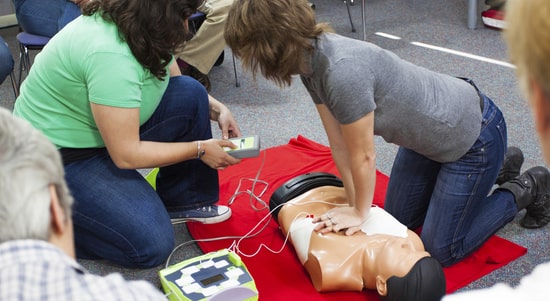
An exceptional indication is exactly how they deal with questions. They maintain answers brief, provide a concrete takeaway, and park complex tangents for a break. Students leave with clear psychological lists, not a haze of intriguing but extra facts.
Respect for students and their boundaries
People bring their background into a first aid course. Someone in the room has lost an enjoyed one to abrupt cardiac arrest. Another fainted in public and still lugs the embarrassment. A considerate teacher knows when to push and when to hold consistent. They check for consent prior to role-play that involves touch, they offer opt-outs scot-free, and they make it clear that speaking out regarding discomfort becomes part of a safe learning environment.

Respect likewise shows up in just how teachers correct errors. Public shaming has no location in training that intends to develop confident -responders. Personal, succinct mentoring functions better. When appreciation happens, it is specific: "Your hand positioning remained regular with all 30 compressions, that maintained the AED evaluation tidy."
Scenario layout that builds judgment
First aid is more than muscular tissue memory. It is picking well with insufficient information. The most effective teachers layout situations that build judgment detailed. Early circumstances are straightforward: a less competent adult, an onlooker readily available to call emergency situation services, an AED close by. Later circumstances include complexity: a choking young child with a panicking moms and dad, a biker with a head injury and possible spine participation, a co-worker with upper body discomfort who refuses to quit working.
Each scenario finishes with a short debrief that asks 3 inquiries: what went well, what would you change, and what details would have helped? The teacher overviews, but allows students speak first. This representation locks in knowing and reveals blind spots. With time, pupils internalize concerns: scene security, rapid analysis, telephone call for aid, act emphatically within training, reassess.
Equipment knowledge, consisting of limitations
Quality teachers understand their equipment totally and instruct you to do the very same. AEDs vary somewhat throughout versions. Good training courses turn via a minimum of two common types so you see various pad placements and voice prompts. For airway barriers, they show pocket masks and face shields, after Click here that let you really feel the seal that really makes breaths reliable. For bleeding control, they show both elastic bandages and improvisated alternatives when sets run out.
They additionally review limitations. Not every office has a pediatric AED key. Not every first aid kit includes a tourniquet. Some AEDs store after-event information that your company have to take care of under privacy guidelines. Clear-eyed teachers flag these restraints and aid you intend around them.
Cultural and legal awareness
First aid and CPR courses run inside legal and social structures. A well-prepared teacher can explain Do-gooder protections in your territory without drifting right into lawful advice. They make obligations clear for designated initial aiders on changes, event volunteers, or childcare companies. If your group collaborates with prone populaces, the teacher addresses approval and protecting straight, making use of language that values self-respect while staying practical.
Cultural capability receives little behaviors: making use of people-first language, offering examples that do not stereotype, and welcoming learners to share how their neighborhoods manage emergencies. The best courses really feel neighborhood, not generic.
Energy monitoring for long days
A criterion first aid and CPR course can run four to 8 hours. That is a long run if the teacher relies upon slides and speeches. Search for a person who varies intensity: a quick workout drill, a short story to reset focus, a hands-on terminal, a short test game, then back to situations. They take care of breaks strategically so students return ready to relocate, not dazed from sugar and caffeine.
Good power monitoring equates directly to much better results. In courses that pace well, you see less careless compressions in the last skill test. Exhausted students cut corners, and edges in first aid become errors. Professional teachers understand when to stop a drill, rest wrists and shoulders, and after that return to with quality.
Clear paths for recurring competence
First aid abilities fade, and every person in the sector understands it. What separates a strong trainer from a fantastic one is just how they establish you up after the training course. They supply a simple strategy: calendar pointers for a cpr refresher course in 12 months if called for by your role, micro-practice triggers you can run throughout team gathers, links to credible videos that align with your certificate supplier's standards, and a note concerning upcoming guideline updates.
Great trainers also welcome comments and remain obtainable. If a learner e-mails a week later with an inquiry about baby choking procedure, they address or point to the ideal source. Some service providers host short open-practice sessions where alumni can drop in and run 2 skills with coaching. That sort of connection maintains real-world readiness high.
Signs you have actually discovered the right instructor
Use the complying with fast check when choosing among first aid courses or a CPR course provider. If many products ring true throughout your initial conversation or demonstration session, you likely have an excellent match.
- They define how they show, not just what they show, and can discuss adaptations for your setting. They develop hands-on time right into every significant subject and use comments devices for CPR quality. Their language appears, their tales have a purpose, and their adjustments are specific. They welcome inquiries, regard boundaries, and rundown clear next steps for preserving skills. Their positioning with recognized guidelines is current, and they can reveal calibration in assessments.
Questions to ask before you book
A short, respectful conversation with a possible teacher will certainly inform you greater than a pamphlet. Take into consideration asking:
- How do you framework technique versus lecture time in a basic first aid and CPR course? What tools do you make use of for CPR training, and do manikins supply live feedback on deepness and rate? How do you adapt first aid training for our setting and roles? When were your training products last upgraded to show guidelines, and how do you take care of changes? What does the assessment resemble, and what occurs if somebody battles to meet the standard?
Notice exactly how each question probes for strategy, not hype. The responses expose whether you are dealing with an entertainer or a teacher.

The side instances that subject expertise
Anyone can run a smooth course when every little thing goes right. The enlightening moments come when it does not. A learner panics throughout a choking drill and begins to sob. The AED fitness instructor battery dies. The place's floor is as well hard for knee-based practice, and half the class begins shifting uncomfortably. In these minutes, professional trainers keep the space constant. They stop briefly the drill, normalize the reaction, and supply a different function. They exchange devices without hassle, or they change the plan and turn it into a teachable point about improvisation and resilience.
I once trained a Informative post group of caretakers in a center where power headed out midway. We relocated the manikins near the home windows, used a phone metronome for compressions, and ran much shorter stations to save energy. Learners later on claimed that low-tech session felt more detailed to an actual emergency situation than the brightened version. That is the heart of excellent first aid guideline: self-confidence that survives imperfect conditions.
How companies set apart: what to search for beyond the instructor
A solid teacher commonly works within a solid system. If you are examining service providers, whether local community companies or national brands, focus on the scaffolding around the class.
- Course design: Does the program sequence subjects for retention, not just coverage? Equipment quality: Are there sufficient manikins for little teams, AED instructors that mirror local devices, and clean, complete first aid sets for practice? Administrative support: Is accreditation provided promptly and electronically, with clear revival timelines? Inclusivity: Do they supply choices for learners with impairments, language assistance, or different assessments when appropriate? Post-course assistance: Are refresher course options, brief practice motivates, or update notifications component of the package?
Names matter much less than execution. Whether you train with a large company or a store first aid pro, the same concepts apply.
What learners can do to make the most of a course
Instructor quality matters, therefore does your preparation. Eat, moisten, and put on clothes you can stoop in. Arrive ready to exercise aloud. If you have past experiences that may ensure drills hard, inform the teacher independently prior to course. Bring a little notepad and write down 3 things you intend to remember for the following year. After class, schedule a five-minute evaluation monthly: 10 compressions, two breaths on a pillow with a metronome app, or a mental rundown of the choking procedure throughout your commute. Little practices keep the paths fresh.
The benefit: confidence that travels
An excellent first aid and CPR course does more than inspect a compliance box. It alters exactly how you move through public areas. You begin noticing AED cupboards, scanning for departures, and cleaning your hands with function. You can relax a room, designate jobs, and get high-grade compressions started while assistance is on the way. That solidity spreads. Teams that train well with each other manage real incidents with much less mayhem and even more care.
At some factor, you may fulfill the minute for which you trained. A co-worker slumps at a workdesk. A child coughs, after that goes quiet. A stranger breaks down near a gym treadmill. When that occurs, you will certainly not keep in mind every slide. You will certainly keep in mind the teacher who maintained your arm joints right, that made you exercise up until the beeps lined up, who respected your rate and still pressed you to competence. That is what makes a terrific first aid trainer: somebody whose teaching sticks with you when the area goes peaceful and the work begins.